Showing posts with label zelda. Show all posts

Wednesday, March 21, 2012

Settin' Me Up With the Spirit in the Sky

[Not sure this was clear last time around, so to be sure, asim here with you again.]

So let's review a game that's been released in the past six months for a change. I'm talking about, of course, everyone's favorite reason to actually turn their Wii on again, The Legend of Zelda: Skyward Sword.

Zelda games are, of course, Nintendo's second most-venerated franchise. When it comes to me, however, these games are number one. So in some ways I'm very biased toward liking these games, but on the flip side that means I tend to be critical of them simply because my expectations are higher. Let's step back in time in a bit and examine what I mean.

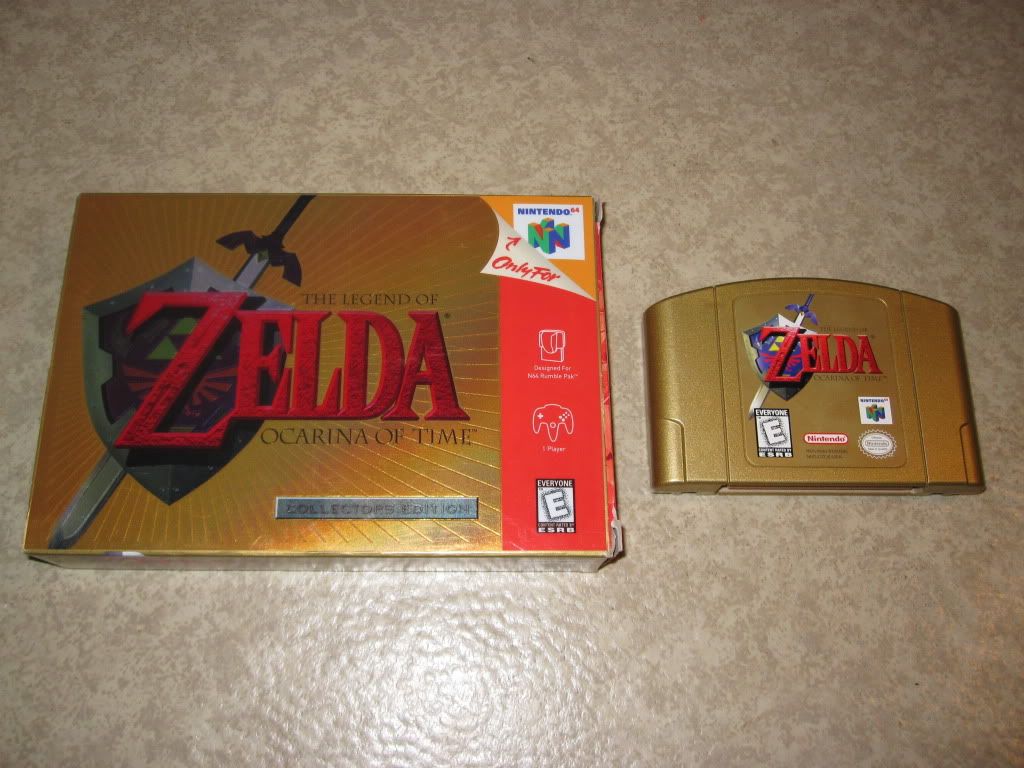
Probably one of the first games I ever beat all the way through by myself was Link to the Past. I didn't own it, however, so to do so I continually borrowed the game from a friend who lived in my neighborhood off-and-on for a year until I finally prevailed. Then, in 1998, I got Ocarina of Time. However, being 13 at the time, I still had little control over how I got games, which means my explicit instructions to my parents on how to procure the gold cartridge version didn't quite get through. I got over that (well, sort of) and as I did I realized that I was playing probably one of the greatest games ever made.

Debates rage on across the Internet over that last statement there, but for me it is still true. I don't really play the Mario games, so instead of Mario 64 Ocarina was the title that showed me the power of this new-fangled 3D thing. If you look hard enough on the Internet, you can even find videos of me playing this game somewhat badly. It remains one of my favorite games, and is the standard by which I have judged all subsequent Zelda games.

Ocarina was probably also the game that got me into "gaming" as a thing and becoming cognizant of the nascent Internet gaming websites and communities. (Remember, it was 1998.) I remember debating kids at middle school the value of in-game rendering versus Final Fantasy VII's pre-rendered cutscenes. (Fun fact: I never had a non-Nintendo console until I got my first job five years ago and bought a 360.) I don't know if I would call myself from back then a fanboy, but I certainly had an opinion.

Thousands of other teenage boys also had opinions, and as the N64 era ended and Nintendo announced its new console, a demo appeared. I think anyone who paid attention to gaming news at the time probably remembers that video. It was determined: we were going to get another epic Zelda game in the same vein as Ocarina, just with better graphics! Three long years later...

Not so much. Oh, the wailing and gnashing of keyboards! Of course, if one got away from the keyboard long enough and actually played The Wind Waker, they found it was actually pretty good. And you know what? I think stylistically, Wind Waker has held up pretty well and I'm glad to see that Nintendo has preserved the style for the DS Zelda games. So, to reference another classic rock lyric, I didn't get what I wanted, but in a way, I got what I needed.

Nonetheless, the wailing and the gnashing and whatnot continued, and eventually Nintendo announced it was developing one last Zelda game for the GameCube. Well, like with many other games, one last game for the 'Cube turned into a launch title for the Wii, and so I got my copy of Twilight Princess before I ever actually acquired a Wii. Since it was right when I moved to California, I remember about this time five years ago I was wrapping up that game, in much the same way I just finished Skyward Sword.

And I have to say, I mean, I liked Twilight Princess, but... I sort of wish it had never come out on the Wii. The tacked-on motion controls were just that, and it showed. Additional evidence that the game was a relatively last-minute port job was the fact the game world was actually mirrored, as Link is stilled properly left-handed in the GameCube version. Other than the controls, though, TP was a pretty standard Zelda game, and since the controls weren't really that great, that mean the game wasn't really that great. In some ways, in releasing the game "everyone" said they wanted, it was almost like Nintendo said, "see, we made the Zelda game you said you wanted, now do you see what we're trying to do?"

Now flash forward to PAX2011, where I got the chance to play Skyward Sword for the first time. I was impressed but afraid the new, actual motion controls (thanks to the Wii MotionPlus stuff) wouldn't really work out. Well, they did, which means I feel pretty good about saying this has been the most fun I've had playing Zelda since Ocarina. Since this one of (if not) the last major titles that will come out of the Wii, one would expect a certain amount of polish, and it is there for this game. I think one of my favorite things is the way the game handles drawing objects in the distance. Instead of fading into a fog or popping in, the game gracefully degrades textures until they look like something out out of an Impressionist painting. Simply put, this is the best looking Zelda game ever made and probably the best looking game on the Wii. I would think that this game is probably about all the console is capable of.

Let me go back to the controls for a second. Okay, they're not perfect, but fortunately the game makes it easy enough to calibrate things when they get out of whack. So the vast majority of the time, when you slash sideways, so does Link. When you slash diagonally across an enemy, so does Link. This manner of control adds a whole new layer of depth, which means overall in this game there aren't as many enemies, but there is more depth simply because almost all enemies are capable of blocking your attacks if you don't approach them correctly. It also means that there are new items and new puzzles. Yes, that's right kids, "move the blocks to a certain configuration" puzzles are at an all-time low in this game.

So at this point, I suppose I should list some things I didn't like about this game. The only thing that really sticks out to me is that I found the soundtrack somewhat unremarkable, but, uh, that's probably about it. The only other thing that I can think of is that the Wii MotionPlus thing can really chew through batteries, but my initial playthrough also went on for over 60 hours. (Last minute edit: Just a couple of weeks ago and 40 hours of playtime later, I re-beat the game on Hero Mode, where your collectible inventory is preserved but you have to replay the game and enemies do twice as much damage while never dropping hearts. Take the fact I did that how you will.)

asim's "tl;dr" summary: This is the best and most original Zelda game since Ocarina of Time and is an excellent reason to dust-off your Wii.

Addendum: Yes, I realize I sort of skipped over Majora's Mask. Well, that's sort of because I skipped over it when I was kid. Sorry. I did get for Virtual Console though and I'm working on it.

Thursday, January 26, 2012

Portable Game Triple Pack

In the past few months, I've completed three games for portable systems: Final Fantasy Tactics: War of the Lions (PSP), The Legend of Zelda: Spirit Tracks (DS), and Ace Attorney Investigations: Miles Edgeworth (DS).

Since they're portable titles or ports of well-beloved console versions, I found it difficult to write at length about any of these. So here's some quick takes about each.

Final Fantasy Tactics: War of the Lions (PSP)
Tactical RPGs are probably my favorite genre of game for portables. Why? They're deep, but they're also turn-based, which means means it's possible to just sit the game down at some point, even during the middle of a battle, and pick it up later. So to this point, I've played several Fire Emblem games for GBA, that Advance Wars game for the DS (Days of Ruin or some such), and of course the Final Fantasy Tactics Advance series. Jonesing for some good tactical RPG goodness, I picked up a PSP and a copy of the original Tactics.

Part of the reason I got the PSP version in the first place is because of one very big problem I had with the original. Square's original efforts for the PlayStation, such as Tactics and, of course, some game called Final Fantasy VII, became instant classics. But in their rush to get the games to the North American market these games got very shoddy translations. (My favorite: "off course!" instead of "of course!" in the battle arena in the Gold Saucer, which was probably just a typo, but still.) As bad as FF7's translation was, FFT's was that much worse. Tactics features a wide cast of characters in a plot full of history and political intrigue, including people very literally getting stabbed in the back. In addition, the gameplay itself is complicated. I tried to get past all this, but without a good idea of what was going on I quickly lost interest.

So what I'm driving at is that the PSP version features an excellent localization. The only other major features of the port are a multiplayer mode (which I never tried) and very occasional animated movies for key moments in the plot. (The animations are great, but they are few and far between.) The graphics and gameplay are pretty much the same, except now it's possible to actually understand what the tutorials say.

As I said, the gameplay is pretty much unchanged. Which is great if you played the original (though, since the class names also changed with the translation, there might be a slight learning curve), but can be harder for newcomers. Many gameplay evolutions have occurred in the past 15 years for tactical RPGs, and while some may interpret this as today's games being easier, I'd say in many cases they've just had enough time to get things right. The most annoying issue I found is that I couldn't evaluate the odds and damage for attacks capable of hitting multiple targets, which made spellcasting difficult. The only other problem I had with the port also had to do with spells: the spell animations caused the software to read the UMD every time, which made them much slower than they were in the original version. (Apparently this game was released long enough ago that "installing" hadn't really been thought up yet for PSP games, as I had this option in the more recent Tactics Ogre port that I just started playing.)

These days, I probably wouldn't recommend this game as an introduction to the genre. However, it remains a classic. If you're a fan of the original, you'll probably want to pick this up just for the new translation alone. I'd also recommend it for anyone who likes tactical RPGs but hasn't played this game yet, especially if you liked the Tactics Advance games but want something with a little more depth. (Well, okay, a lot more depth.)

The Legend of Zelda: Spirit Tracks (DS)
Spirit Tracks is the second Zelda game for the DS, following the lead of Phantom Hourlgass. Controls are mostly unchanged from the previous game, where the stylus is used to move Link around the screen, select/talk to NPCs, use items, etc. It was innovative the first time around, but now it's expected. The game can be said for the rest of the game. It's a direct sequel to PH (and, therefore, Wind Waker), except instead of ships, this time around the game has trains. Yes, that's right, trains. You can collect treasures to sell and use to upgrade your train's health, as various baddies will occasionally attack you as you traverse the world map. This game is fun and I would generally recommend it, but it's not going to blow your mind or anything. (Fortunately, Skyward Sword is shaping up to be very good, and I hope to finish it and write about it soon.)

Ace Attorney Investigations: Miles Edgeworth (DS)
The Ace Attorney games have been covered pretty extensively here, between the original series and Apollo Justice. Timeline-wise, this game takes place shortly after the events of Trials and Tribulations but several years before the core of Apollo Justice. This game is pretty much made for people who are fans of the original series. Several characters make cameos and references abound. You certainly could play this game standalone, however. As it says in the title, this game is just "investigations". While the game still features the originals' trademark cross-examination bits, the focus is on investigating crime scenes deducing exactly what happened. Nonetheless, I still missed having parts in the courtroom (as it provided a change of scenery), and for the most part the investigations aren't nearly as free roaming (as you cannot, most of the time, move between areas at will). In addition, the game doesn't feel deep enough, from a certain perspective. In the Ace Attorney games, you're fighting the prosecution and the witness, in many ways, whereas in this game that extra "side" is missing.

The biggest problem I had with this game, though, were the puzzles. There were certainly times I would be frustrated in the other games, but in this game I really felt like I had to solve things much more on the game's terms, not to mention the number of times I was a step ahead of the game (for instance, in order to present a piece of evidence I would often have to introduce another piece of evidence first, even though I had already made the connection between the two).

Basically, I would only recommend this game if you're fan of the Ace Attorney series. If you aren't yet, hunt down a copy of the original Phoenix Wright game (or download it on the Wii), and perhaps eventually you'll fit in the category of people who I'd recommend this to. Also worth noting is that a sequel to this game does exist in Japan, but Capcom currently has no plans to release it in the US. Would I buy that game if it made it over here? Probably.